
Blood Sugar Balance: The Real Reason You Crash at 2pm (and Wake Up at 3am)
You feel okay in the morning. You make it through lunch. Then around 2pm, someone pulls your plug.
You’re foggy, you’re short with everyone, and the chocolate chips in the pantry start calling your name.
Maybe the afternoon isn’t your thing. Maybe it’s the 3am wake-up: wide awake for no reason, brain already writing tomorrow’s grocery list. Or the after-dinner snacking that won’t quit. Or the jeans that feel tighter even though you’re eating “healthy.”
Most moms chalk this up to stress, hormones, or getting older. Those are real. But one thread runs through all of these symptoms, and almost nobody connects it: blood sugar balance.
You Don’t Have to Be Diabetic to Have This Problem
Most of us file blood sugar under “diabetes stuff.” If your doctor hasn’t flagged it, it’s not your problem. Right?
Not quite. Blood sugar dysregulation is when your blood sugar climbs too high and then crashes too low, over and over, all day long. It’s one of the most common and most overlooked reasons moms feel lousy, and it can go on for years before it shows up as a red flag on a standard lab report.
You can be eating what looks like a perfectly healthy diet and still be riding the rollercoaster.
Blood sugar balance isn’t a diabetes conversation. It’s an “I want to feel like myself again” conversation.
That Was Me
For years my days looked the same. Fine in the morning, holding it together through lunch, unplugged by 3pm. Cue the caffeine. Cue something sweet. Cue the guilt.
I’d wake up the next morning puffy and wonder what was wrong with me. It wasn’t willpower. My blood sugar was swinging like Sia from a chandelier.
Once I understood what was happening in my body, I could finally do something about it. So let’s start there.
What Actually Happens When Blood Sugar Spikes
When you eat, your body breaks food down into glucose (sugar) and sends it into your bloodstream. Your pancreas answers with insulin, the hormone that moves glucose out of your blood and into your cells, where it becomes energy. So far, so good.
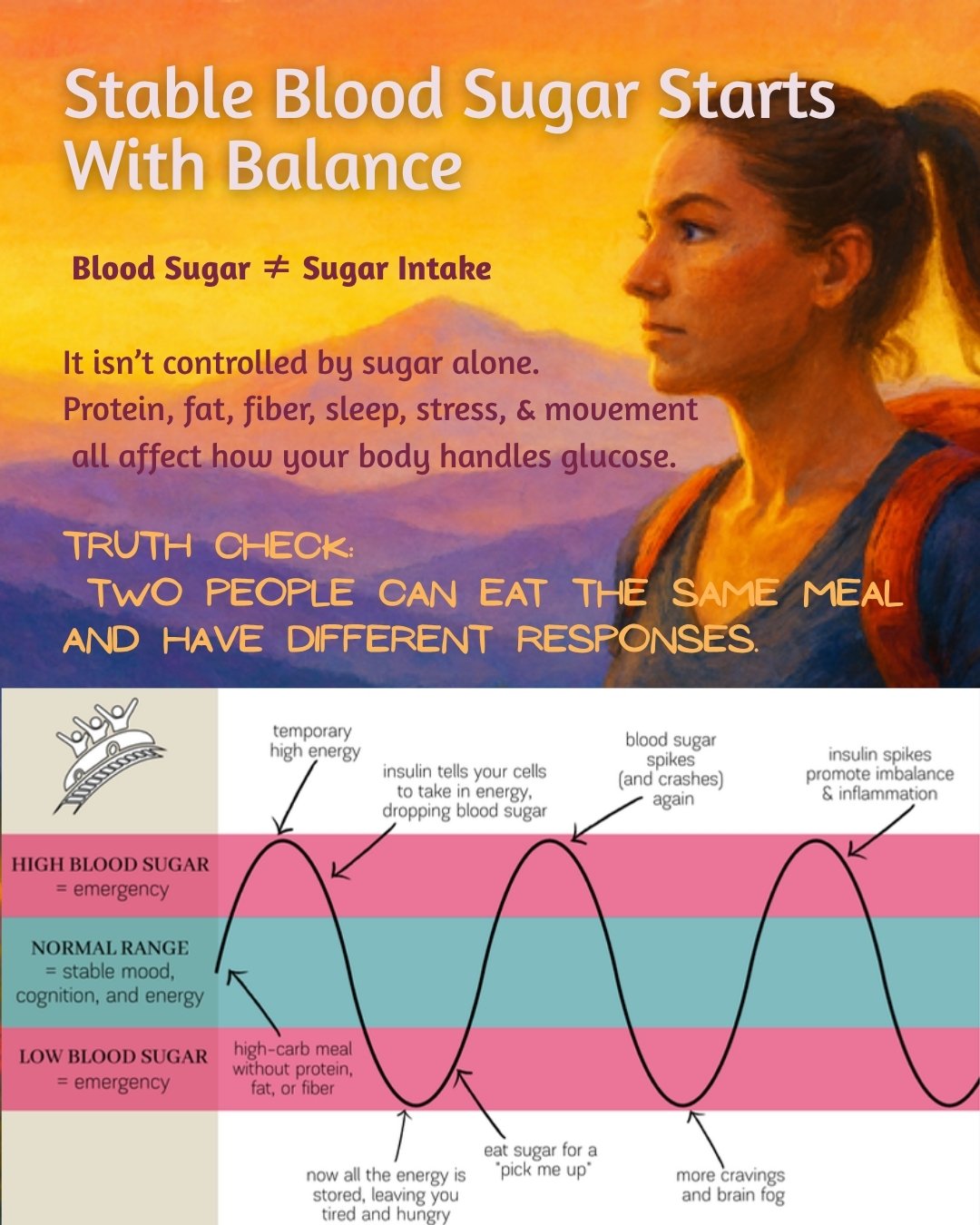
The trouble starts when blood sugar climbs too fast. (Hello, muffin and latte on the drive to school.) Your body overreacts and floods the system with insulin, and blood sugar drops about as fast as it rose. That drop is the crash. It’s what sends you hunting for a snack, feeling shaky, or fighting to keep your eyes open in the pickup line.
Here’s the loop in real life:
You skip breakfast or grab something carb-heavy.
Blood sugar spikes, and you get a quick burst of energy.
Insulin overcorrects, and blood sugar crashes.
You feel foggy, irritable, or ravenous, so you reach for something sweet.
Repeat.
Over months and years, that loop wears your cells down. They stop responding to insulin the way they used to. That’s called insulin resistance, and it starts a cascade that touches nearly every system in your body: inflammation, hormones, heart and brain health, and the weight that won’t budge no matter how clean you eat.
The Symptoms Nobody Connects to Blood Sugar
The afternoon crash is the obvious one. Plenty of others don’t look like “blood sugar problems” at first glance.
The 2–3pm slump. Often it’s a blood sugar crash, not a sleep problem.
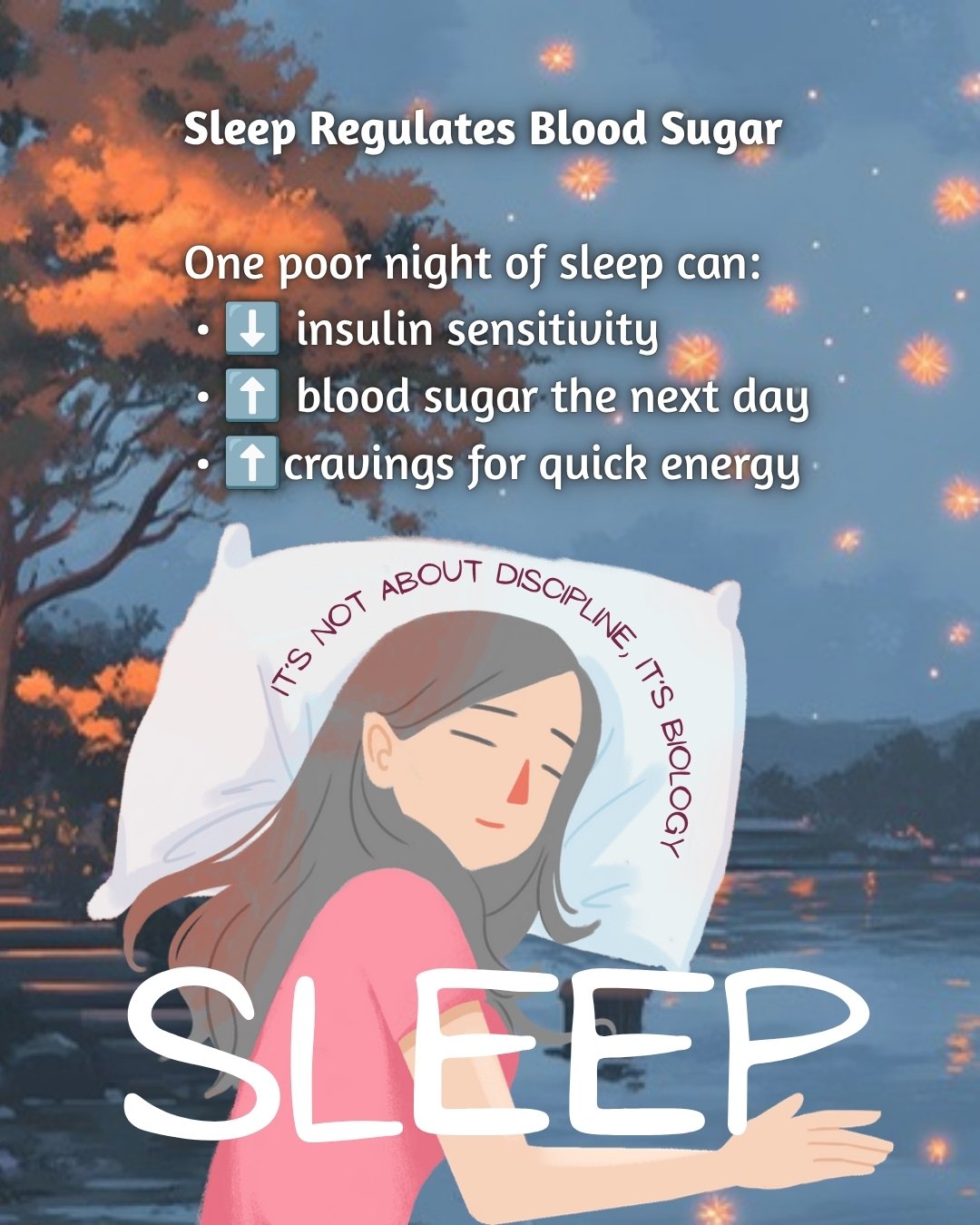
Waking at 3am. Overnight, blood sugar can dip low enough that your body releases cortisol (your main stress hormone) to bring it back up. Cortisol’s job is to wake you up. So it does. Here’s the funny part: we don’t notice that stress woke us. We just notice we have to pee, so we blame the bladder. But often the bladder is an opportunist, not the instigator.
Cravings that feel out of your control. Your body is asking for a fast fix for low blood sugar. That’s chemistry, not a character flaw.
Mood swings and “hanger.” Low blood sugar affects the brain chemicals that keep your mood steady. Hungry and angry come from the same place for a reason.
Brain fog. Your brain runs on glucose. Unsteady blood sugar means unsteady fuel means sluggish function.
Belly weight that won’t move. Insulin is a storage hormone. When it’s high all day, your body holds on to fat, especially around the middle.
PMS that hits harder. Insulin talks directly to estrogen and progesterone, so blood sugar swings can turn up the volume on every hormonal symptom you already have.
The more of these you recognize, the more it’s worth taking blood sugar seriously.
Why Moms Are Set Up for This
Picture a typical mom day. Caffeine until noon. Breakfast is a quick grab like toast, if it happened at all. Lunch is whatever’s left on the kids’ plates. Dinner is a drive thru on the way to this or that function. Then a 10pm stress snack once everyone is finally in bed.
That pattern is practically engineered to swing blood sugar. Now stack on short sleep, which makes your cells less sensitive to insulin. Add steady low-grade stress, which keeps cortisol up, and cortisol raises blood sugar even when you haven’t eaten a thing. Then add a hard season, a big life change, or perimenopause, all of which can change how your body handles insulin.
That’s not a willpower problem. It’s biology. And biology responds to what you do.
How to Start Balancing Your Blood Sugar Today
No prescription. No dramatic overhaul. These are small shifts, and they work.
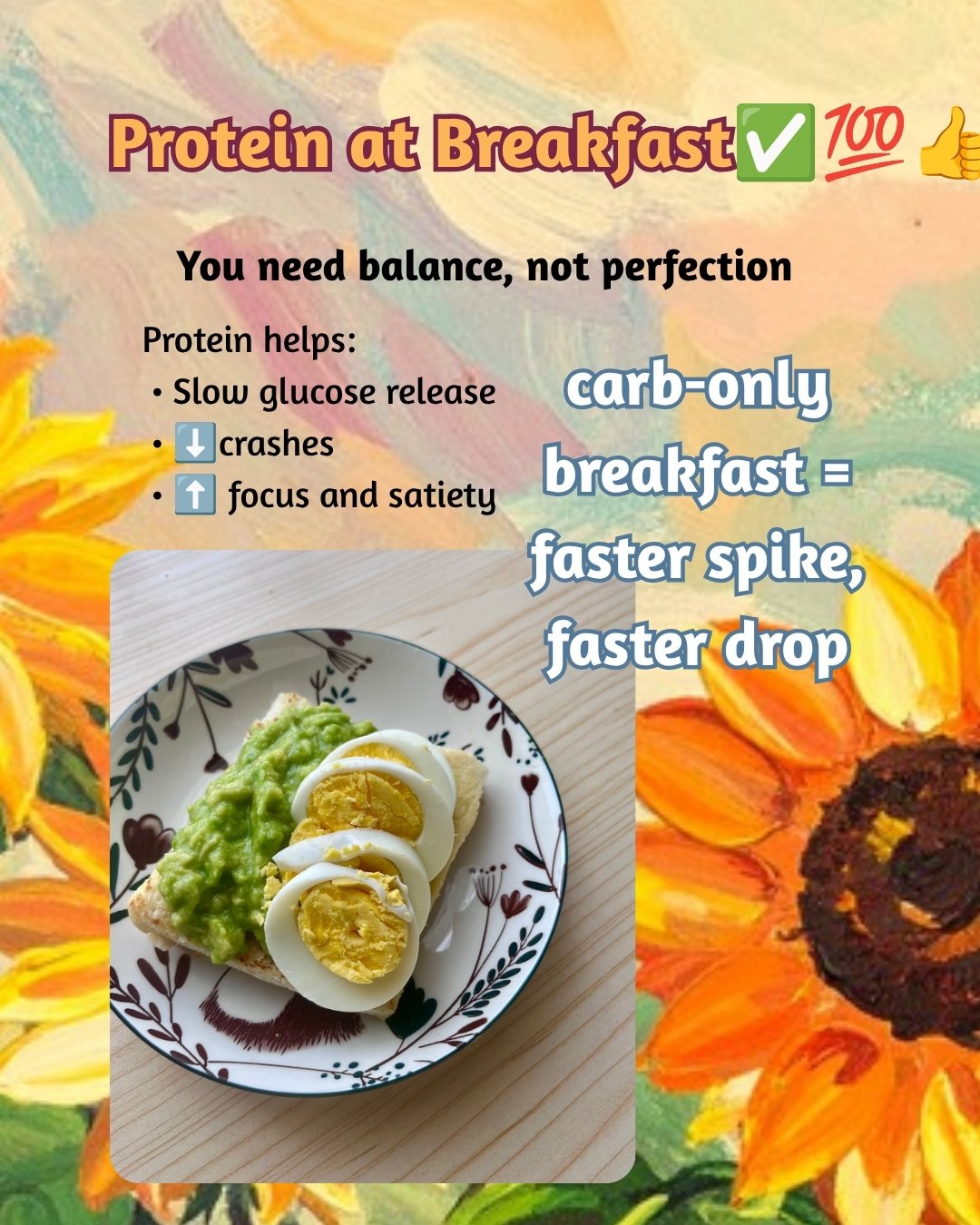
Eat protein (and some fat) at every meal. Protein and fat slow down how fast carbs hit your bloodstream. A couple of eggs, a scoop of Greek yogurt, or a handful of nuts changes how your body handles everything else on the plate.
Don’t let carbs go solo. Fruit is great. Pair it with almond butter. Crackers are fine. Put some cheese or turkey on them.
Eat breakfast, and make it count. Eating within an hour of waking sets your blood sugar rhythm for the whole day. A protein-forward breakfast beats toast and coffee by a mile, and it’s your best defense against the 2pm crash.
Try eating in order. Vegetables first, then protein and fat, then the starchy carbs last. Same food, different order, and studies show a noticeably smaller spike after the meal.
Walk after you eat. Ten minutes is plenty. Working muscles pull glucose out of your blood like a sponge, and it doesn’t have to be a workout. Loop the block. Walk the dog.
Watch the liquid sugar. Juice, sweetened coffee drinks, and even some “healthy” smoothies hit your bloodstream faster than almost anything you chew.
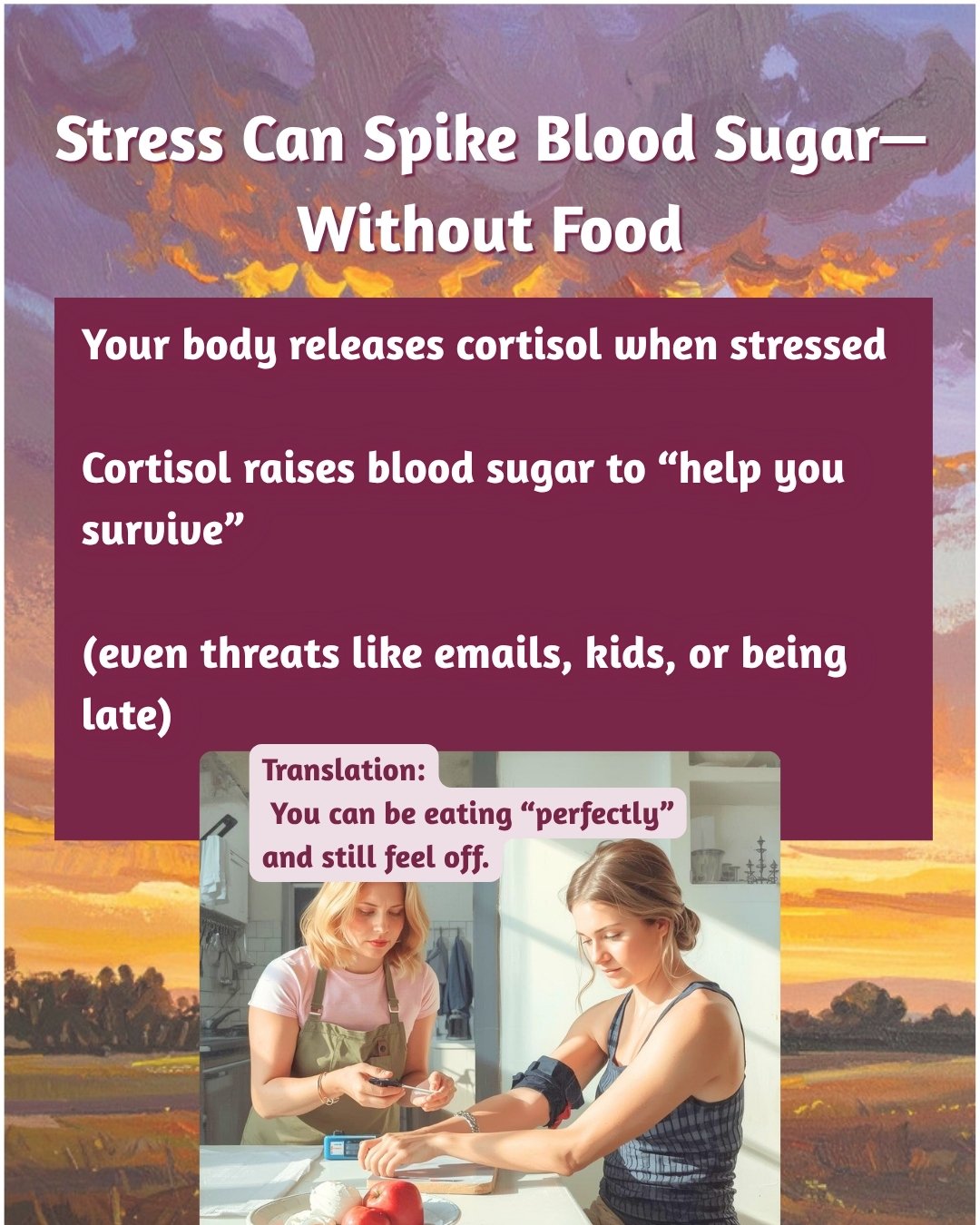
Take stress seriously. This one surprises people. Cortisol raises blood sugar on its own, so a calmer nervous system really is a blood sugar strategy. A few slow breaths before you eat counts.
You don’t need to do all all seven. Pick the one that fits your real life this week. Protein at breakfast is a great place to start. When you master that, try another one.
What Balanced Blood Sugar Feels Like
When your blood sugar is steady, the afternoon stops being a cliff. Cravings get quieter. You sleep through the night more often. Your patience lasts past 4pm.
It’s like turning off static you didn’t know was there. Suddenly you can hear what your body has been trying to tell you.
This isn’t about perfection or giving up carbs forever. It’s about knowing how your body works and making a few shifts that add up.
Want to See What Your Blood Sugar Is Actually Doing?
If you’d rather know than guess, a continuous glucose monitor (CGM) is one of my favorite tools. It’s a small sensor worn on the back of your arm that tracks your blood sugar around the clock, so you can watch in real time how food, stress, sleep, and exercise move your numbers. I wore one for a month, and it surprised me.
Your Next Step
Blood sugar might be your missing piece, or it might be one piece of a bigger picture. Not sure where to start? Take the free Well Mama Checkup. It’s 20 questions, and it shows you which trailhead to start on.