
3 Hidden Things Sabotaging Your Metabolism (That Have Nothing to Do With Food)
You’ve done the diets. You’ve done the workouts. You’ve tracked, cut out, and swapped. And you’re still standing in front of the mirror wondering why your body doesn't seem to reflect your efforts. (Let's be honest, if life were fair this mom gig alone would leave us lean, not mean.)
Before you blame your willpower or your genes or your lack of personal chef and trainer, and definitely before you lower your food intake even more and swear off food joy forever, let’s talk about three things that quietly wreck your metabolism and that most diet programs completely ignore. Surprisingly, none of them are on your plate or in the gym.
Saboteur #1: Poor Sleep
Your 2am tossing and turning is doing more than making you cranky. It’s throwing a wrench into your metabolism, and the research on this is clear.
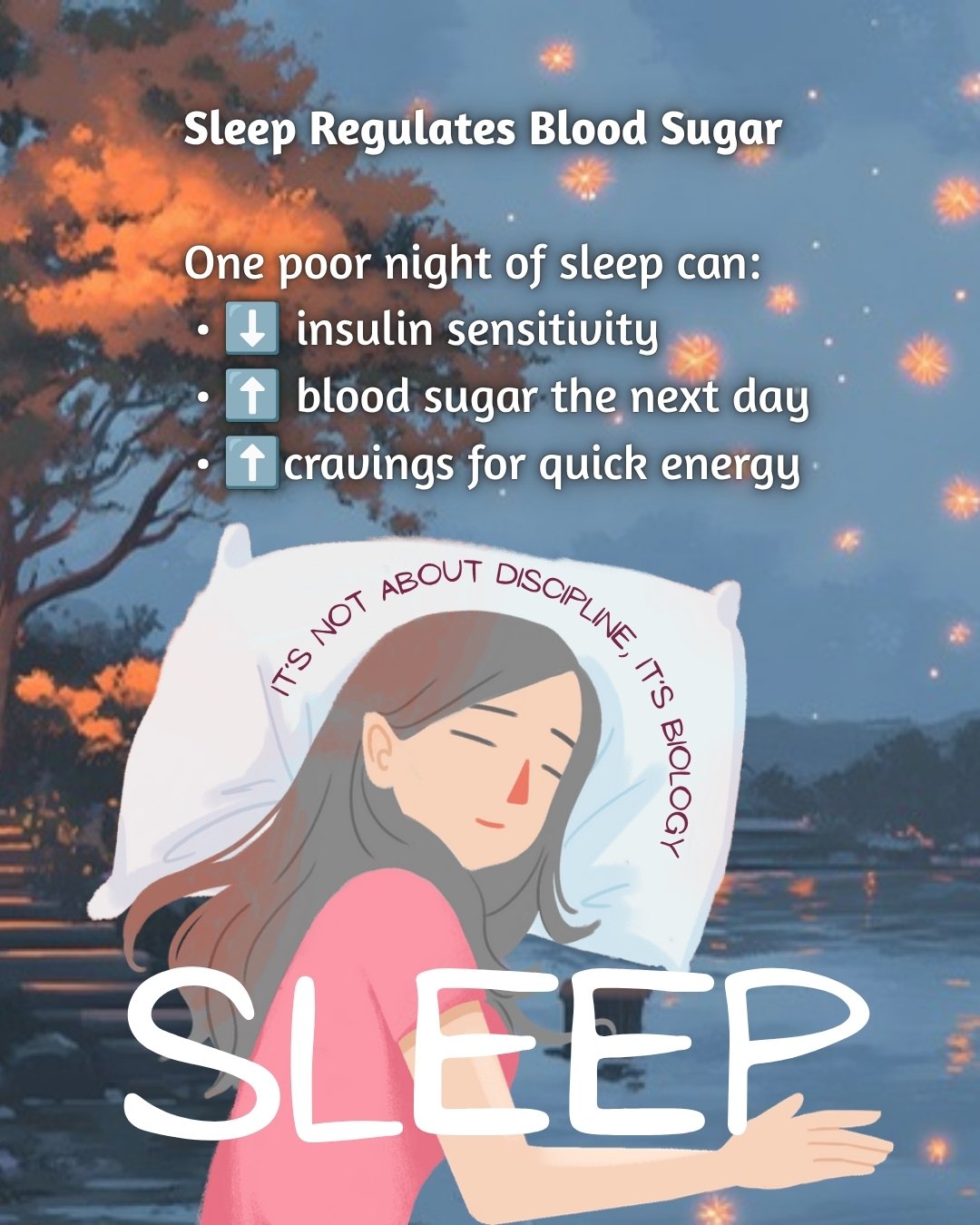
Sleep isn’t passive. While you sleep, your body repairs tissue and recalibrates hormones. It’s when your metabolism catches up and gets ready for the next day.
Cut that short, or break it into choppy pieces, and the effects add up fast. Even a few nights of poor sleep make your body worse at handling insulin, so blood sugar runs higher and swings more. Short sleep also scrambles ghrelin and leptin, your hunger and fullness hormones. The next day you’re hungrier, and your brain specifically wants high-fat, high-sugar foods. Sleep-deprived brains literally find those foods more appealing.
And this might just stop your weight loss efforts in their tracks: short sleep tells your body it’s under stress, and a stressed body holds on to its fat stores like an emergency savings account. I regularly work with women who can’t get the scale to move, and who also sleep terribly. That’s not a coincidence.
You can eat the cleanest diet imaginable. If you’re not sleeping, you’ll be fighting your metabolism every step of the way.
Saboteur #2: Chronic Stress

When you’re stressed, your body releases cortisol, your main stress hormone. One of cortisol’s jobs is to raise blood sugar. Your body assumes you might need to run or fight, and glucose is fast fuel.
But you’re not running or fighting. You’re in the school drop-off line. You’re in a work meeting. You're balancing the budget. You’re running 5 carpools. You're caring for an aging parent. The stress is real, but that extra glucose has nowhere to go. So insulin rises to deal with it, and insulin that stays high encourages fat storage, especially around your middle.
Stress also changes what you want to eat. The research here is honestly validating: stress makes us reach for high-fat, high-sugar comfort food. That’s not your fault! It’s your brain looking for fast reward and fast energy, and let's be honest, broccoli isn’t winning that contest.
Add the fact that stress wrecks sleep (see Saboteur #1), and you’ve got a loop that’s really hard to break with diet alone.
A weight-loss plan that stresses you out is working against you at a chemical level.
Saboteur #3: Toxic Load
This one surprises people the most. But if you’ve truly tried everything and the weight won’t move, it’s worth understanding how toxins and fat interact.
We’re exposed to more chemicals than any generation before us: pesticides on food, chemicals in personal care products and plastic packaging, heavy metals in some water supplies, chem trails in the air, and so many other things in our environment. Your body manages all of it even if you don't notice it consciously.
Here’s why that matters for weight. Many of these chemicals are fat-soluble, so they don’t flush out easily. Your body sequesters them, tucking them away in fat tissue where they’re less likely to harm your vital organs. In other words, your fat is acting as a storage unit for toxins, and letting go of fat means letting those toxins back into circulation. When your detox pathways can’t keep up, your body holds on.
Some of these chemicals go a step further. Researchers call them obesogens: chemicals that actively promote fat gain. Ouch, right? Obesogens can increase both the number and the size of your fat cells, throw off the hormones that control hunger and fullness, and make your body less responsive to insulin. Common ones include BPA and phthalates (in plastics and synthetic fragrance), PFAS “forever chemicals” (in nonstick pans and food packaging), and certain pesticides.
Sometimes the problem isn’t the fat itself. It’s what the fat is holding.
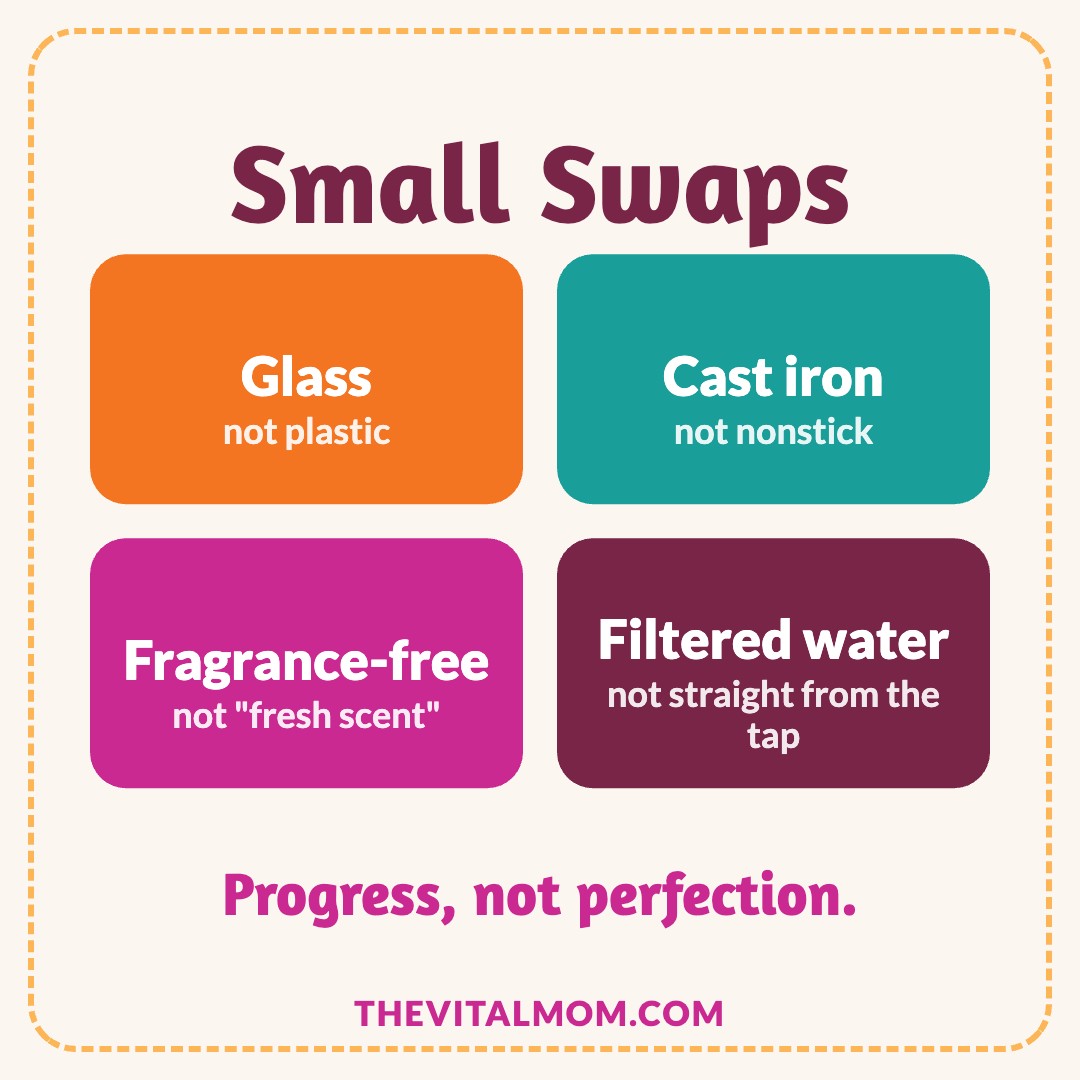
That’s why supporting your detox pathways isn’t just a wellness trend or a buzz word. It really is a high-leverage metabolic strategy. Before you jump for the first box that says detox, know there's a method to the madness. The order matters. Start by cutting down what’s coming in: swap plastic for glass, choose fragrance-free, and filter your water. You don't have to go gangsta, start one thing at a time with what's easy and work up as you get more bandwidth. Meanwhile, support the ways your body clears toxins with water, fiber, and a good sweat. For women who are eating well, exercising, and still stuck, lowering toxic load is often the lever that finally moves things.
So What Do You Do With This?
None of this is a quick fix, but your body does respond to change.
Sleep improves when you deal with the stress and nutrient gaps that drive insomnia.
Cortisol settles when you keep blood sugar steady and give your nervous system real recovery time.
Toxic load drops when you cut down what’s coming in and support the ways your body clears it.
None of that is impossible. It’s just not something a calorie-counting app will ever touch.
Real metabolism support looks at the whole woman, not just what’s on her plate. It looks at what’s happening in her body, her nervous system, and her home.
Your Next Step
Not sure which of these is your biggest saboteur? Take the free Well Mama Checkup. It’s 20 questions, and it shows you which trailhead to start on.